

On a present-value basis, CBO estimates that long-term fiscal effects of Medicaid spending on children could offset half or more of the program’s initial outlays, depending on sets of reasonable parameter values.
Medicaid and CHIP

 Report
CBO estimates that the Center for Medicare & Medicaid Innovation’s (CMMI’s) activities increased federal spending between 2011 and 2020 and will also increase it from 2021 to 2030. In 2010, CBO projected that CMMI would produce savings.
 Blog Post
CBO released updated projections of health insurance coverage for people under age 65 in the journal Health Affairs.
 Report
CBO describes features of the Medicare and Medicaid improvement funds and how the funds are accounted for in CBO’s baseline and cost estimates.
 Report
CBO estimates the budgetary effects of options for expanding federal Medicaid payments to states for services provided to Medicaid enrollees ages 21 to 64 who are in inpatient facilities known as institutions for mental diseases.
 Report
CBO issues a volume describing 17 policy options that would each reduce the federal budget deficit by more than $300 billion over the next 10 years or, in the case of Social Security options, have a comparably large effect in later decades.
 Report
CBO issues a volume that contains short descriptions of 59 policy options that would each reduce the federal budget deficit by less than $300 billion over the next 10 years.
 Report
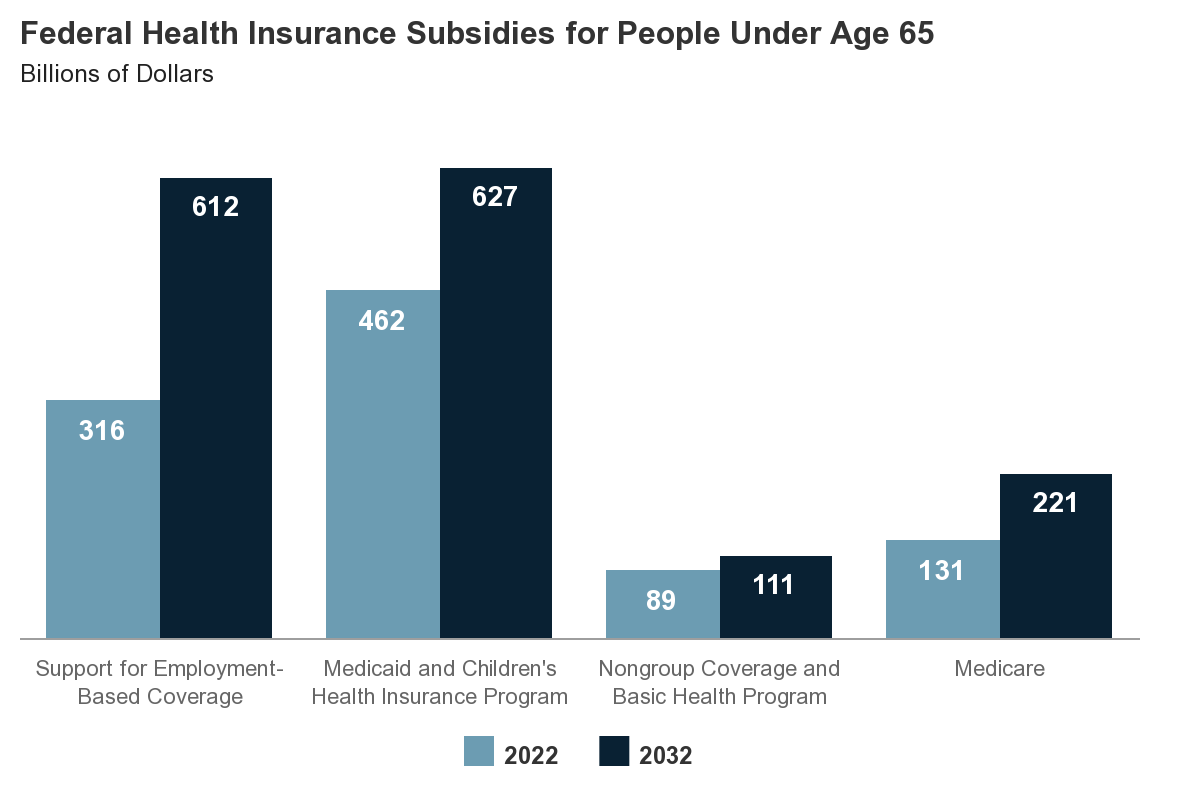
In CBO and JCT’s projections, net federal subsidies in 2022 for insured people under age 65 are $997 billion. In 2032, that annual amount is projected to reach $1.6 trillion.
 Report
CBO analyzes the effects of work requirements and work supports on employment and income of participants in Temporary Assistance for Needy Families, the Supplemental Nutrition Assistance Program, and Medicaid.
 Report
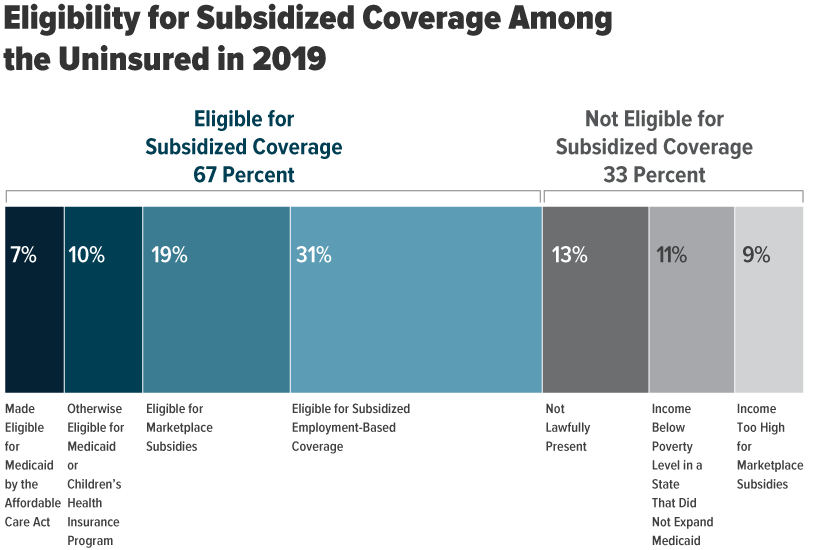
In 2019, about 12 percent of people under 65 were not enrolled in a health insurance plan or a government program that provides financial protection from major medical risks. In this report, CBO describes that uninsured population.
 Report
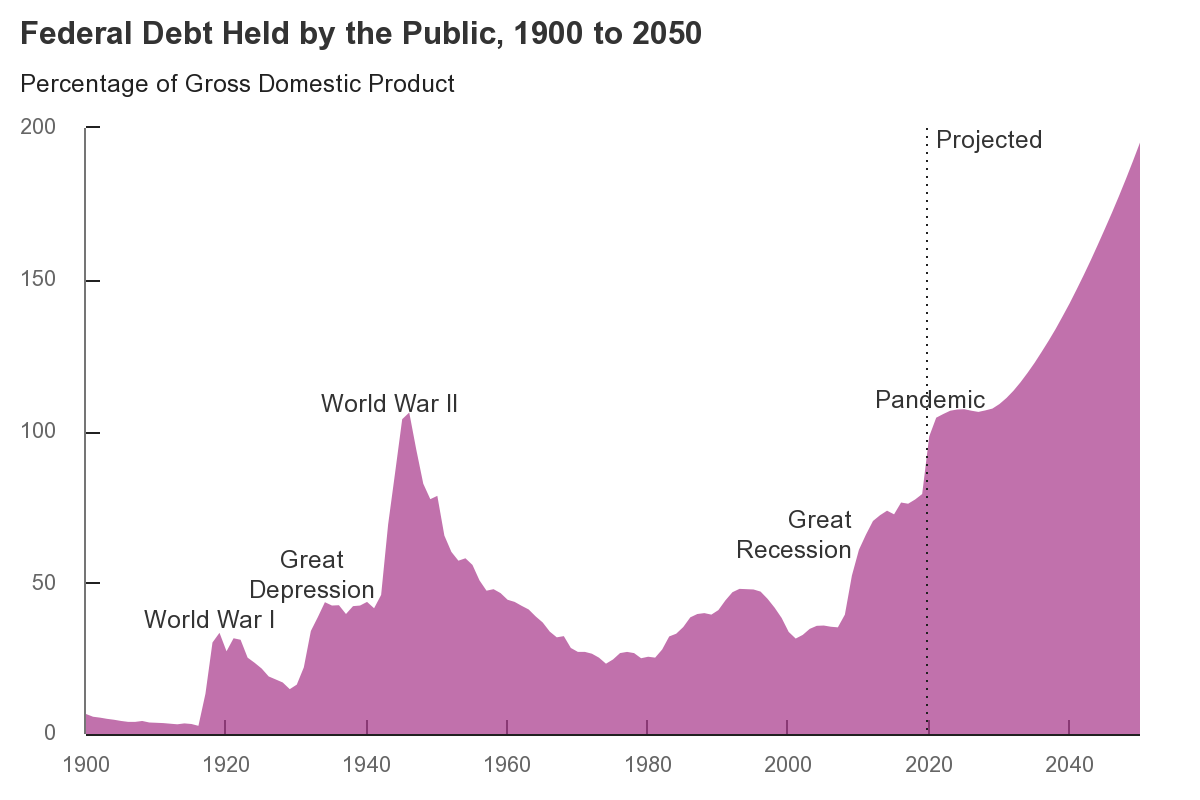
CBO presents its projections of what federal deficits, debt, spending, and revenues would be for the next 30 years if current laws governing taxes and spending generally did not change.
 Report
In 2015, brand-name specialty drugs accounted for about 30 percent of net spending on prescription drugs under Medicare Part D and Medicaid, but they accounted for only about 1 percent of all prescriptions dispensed in each program.
 Report
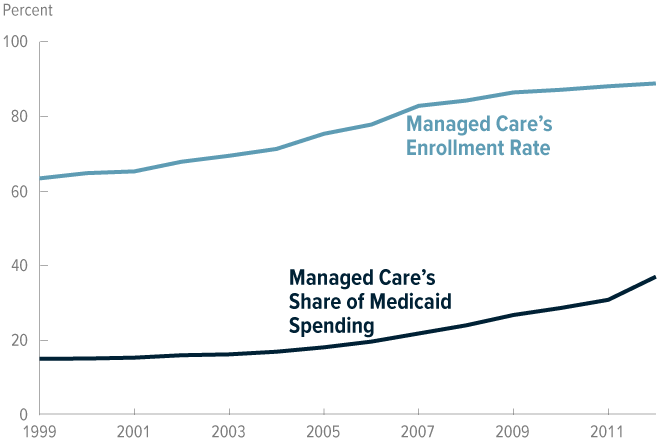
CBO presents information on enrollment in and spending for Medicaid managed care and analyzes factors affecting those measures—including the types of beneficiaries, geographic areas, and range of services that managed care programs cover.
 Report
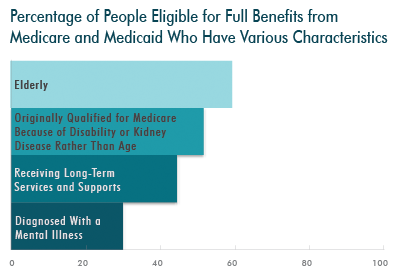
People eligible for both Medicare and Medicaid benefits—known as “dual-eligible beneficiaries”—are a varied group, but many have extensive health care needs and account for a disproportionate share of spending on Medicare and Medicaid.